
Currently Empty: £0.00


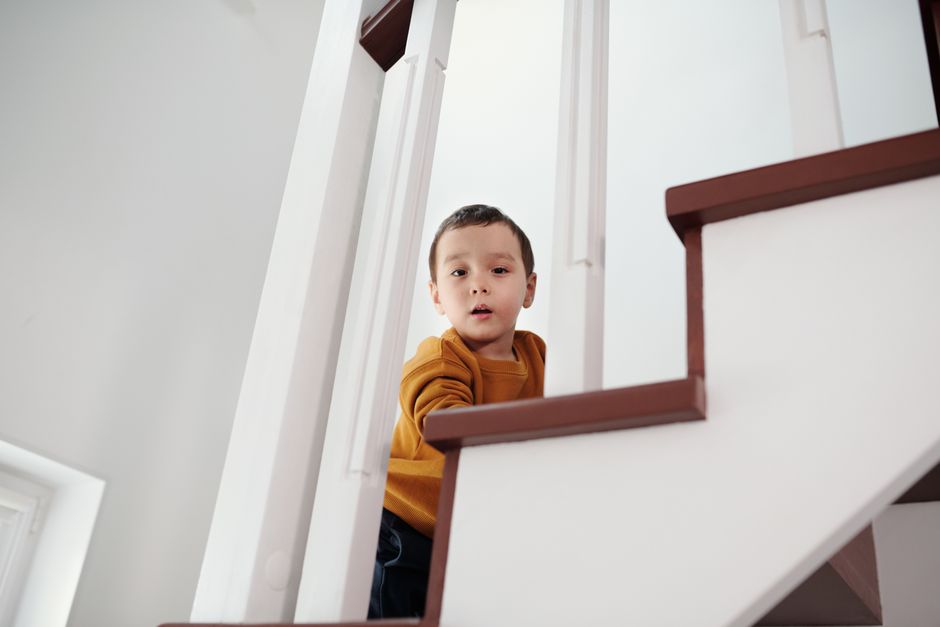
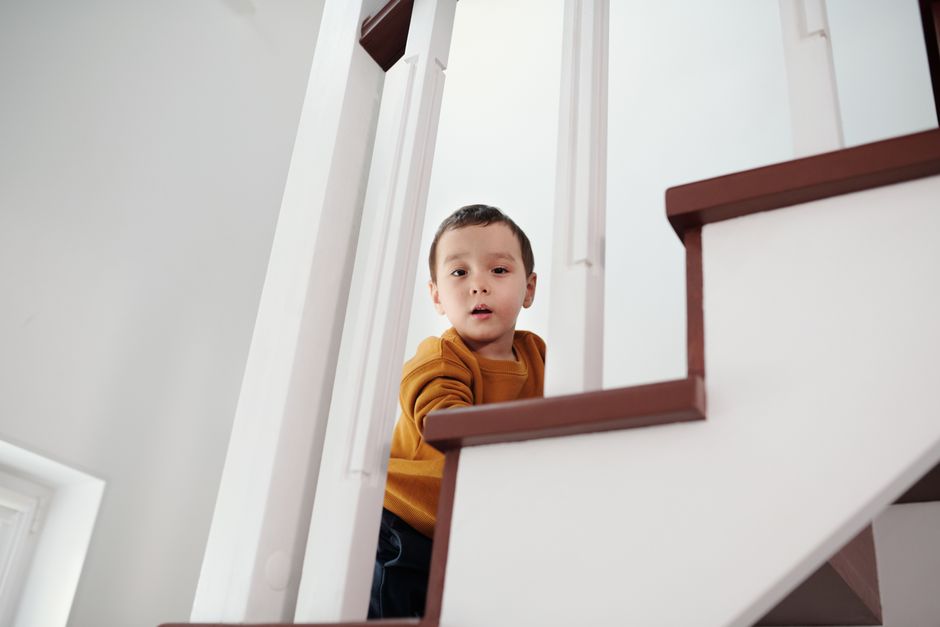
Stairs are a familiar part of most homes, bridging the vertical distance between floors and making everyday life possible. For a young child, though, they present a serious accident risk. Babies and toddlers are naturally curious, their balance is still developing, and they have little sense of danger. The good news is that most stair accidents can be prevented with a combination of supervision, safety equipment, and simple household habits. This article outlines the accidents most commonly seen in the home and offers practical advice for reducing the risks.
Why stairs present a danger to young children
Stairs are designed to bridge a large vertical distance between lower and higher levels by dividing it into smaller vertical steps. Adults take this movement for granted, but a child’s body is very different from an adult’s. Toddlers are top-heavy, their depth perception is limited, and they struggle to judge where one step ends and the next begins. A flight of stairs, meaning a set of steps leading from one level of a building to another, can look like an invitation to play rather than a hazard. That mismatch between what a child sees and what they are physically able to do is at the root of many accidents.
Babies and crawling
When a baby starts to crawl, the stairs often become an appealing destination. They may climb up several steps with surprising speed, only to realise they cannot safely get back down. A fall from even a short height can cause bruises, cuts, or more serious injuries. Babies do not understand the risk, so a secure barrier is essential from the very first time they become mobile.
Toddlers and early walking
Once a child can walk, they often want to climb the stairs independently. Their stride is short, their grip is weak, and they may not yet have the coordination to hold a handrail correctly. Smooth steps, socks on feet, or carrying a favourite toy all add to the risk of slipping. At this stage, teaching and supervising are just as important as physical barriers.
Common stair accidents in the home
Most stair injuries in young children follow a similar pattern. Recognising these scenarios can help you target your prevention efforts.
-
Falls from the top of the stairs when a child crawls or walks towards an open stairway without a gate.
-
Slips on polished or smooth steps, especially when wearing socks or tights.
-
Tumbles while carrying toys, books, or other objects that block the child’s view of their feet.
-
Falls from a parent’s arms if the adult stumbles or loses balance on the stairs.
-
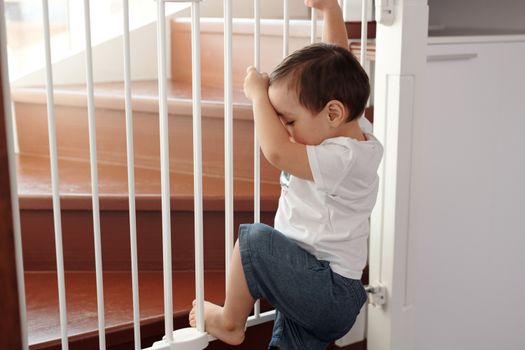
Climbing over or under a stair gate that is not fitted correctly.
-
Reaching for items left on the steps, which shifts the child’s weight forward and leads to a fall.
Many of these accidents happen during the everyday chaos of family life, when a doorbell rings or a phone call distracts a supervising adult for a few seconds. Awareness of these patterns is the first step in preventing them.
Where stair accidents are most likely to happen
The greatest risk is at the top of the stairs, where a fall involves the longest drop. The lower few steps are also common accident spots because children are learning to negotiate them. Staircase design can make a difference too. Spiral and space-saving staircases often have narrow, wedge-shaped steps that are harder for small feet to manage. A winder turn, which uses three steps to change direction and is ideal when space is tight, creates irregular tread shapes that can confuse a child’s footing. Even a straight timber staircase, which is often cost-effective and assembled quickly for fast installation, can be slippery for a small child. Whatever the design of your staircase, the same principle applies: the structure itself is fixed, and the responsibility is on the measures you put in place around it.
Practical prevention measures for every home
There is no single measure that completely removes the risk of stair accidents. The most effective approach combines several layers of protection.
Fit safety gates at the top and bottom
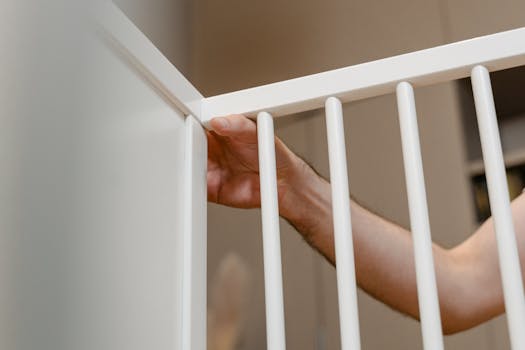
A properly fitted safety gate is one of the most valuable pieces of equipment you can buy. A gate at the bottom of the stairs stops a crawler from starting to climb while you are elsewhere in the room. A gate at the top of the stairs is even more important because it prevents a dangerous fall from height. Top-of-stairs gates should ideally be fixed to the wall or banister rather than pressure-mounted, as a child can sometimes push against a pressure gate hard enough to dislodge it.
Keep stairs clear and well lit
Toys, laundry, books, and shoes left on the stairs are trip hazards for everyone in the household, not just children. Make it a habit to keep the stairs clear and store items away properly. Good lighting is equally important. Ensure the staircase is well lit during the day and consider adding a night light near the top and bottom so the steps are visible if your child gets up in the dark.
Teach children how to use stairs safely
Children need to learn how to climb stairs, just as they learn to walk and run. When your child is ready to attempt the stairs, show them how to go up and down on all fours first. As they grow, encourage them to hold the handrail, take one step at a time, and never run on the stairs. Until you are confident in their ability, always stay close enough to catch them if they stumble.
Give children a handrail at their own height
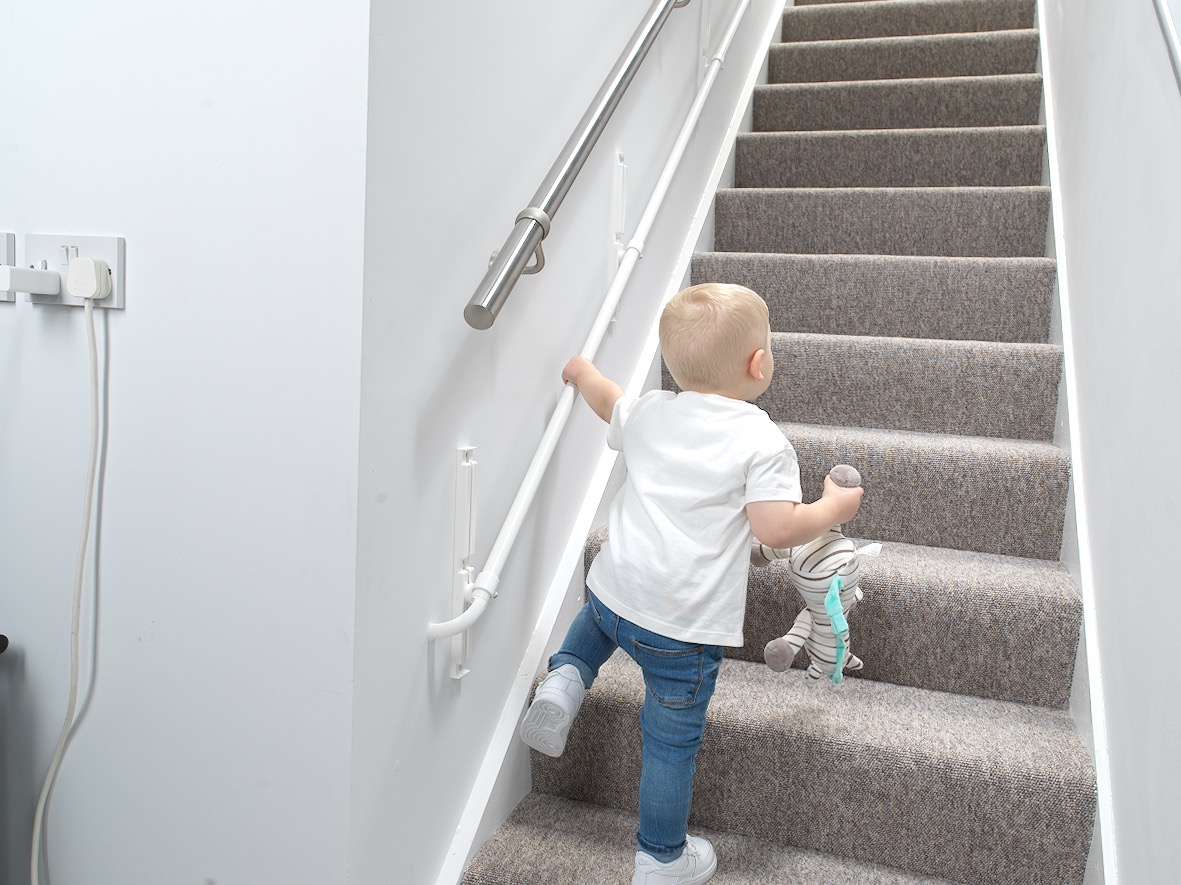
Adult handrails are positioned for adults. A toddler reaching up to grip an adult rail is more likely to lose balance than to gain support, and may instead try to climb the balustrade or newel posts. A handrail fitted at the child’s height gives them something secure to hold, with a grip that matches their small hands. This simple change helps a child build confidence and independence on the stairs under supervision.
The role of an adjustable child handrail
An adjustable child stair handrail is a prevention measure that works with a child’s changing needs. KiddieRail makes an award-winning, adjustable handrail designed specifically for young children, from the time they begin learning to walk until they are tall enough to use the adult handrail comfortably. Its versatility is one of its greatest strengths.
The height can be adjusted as your child grows, so the rail is always at the optimum level. Installation is designed to be straightforward, and the product is compatible with most home layouts, whether you have a straight staircase, a winder turn, or a more unusual design in need of a cost-effective solution. Because the rail sits at the child’s natural grip height, it encourages good stair habits from an early age. For parents, childminders, and family members, that means a little less worry and a safer staircase for everyone who uses it.
Extra caution for specific types of stairs
Spiral and space-saving staircases
Spiral and space-saving designs can look attractive in a compact home, but their wedge-shaped treads make them more challenging for young children. The narrow side of each step offers very little room for a small foot. If you have this type of staircase, consider using a gate at both ends even after your child becomes a confident climber, because the geometry of the steps makes missteps more likely.
Outdoor staircases
Outdoor steps are exposed to rain, moss, leaves, and frost, all of which make surfaces slippery. Check the condition of your outdoor stairs regularly and keep them clean and dry where possible. Children should be supervised closely when using outdoor stairs, as they lead to other garden hazards as well.
Stairs with open risers
Some staircases have open risers, meaning there is a gap between the steps. These gaps can trap a child’s head or limbs. If your home has open risers, a child safety barrier or balustrade with appropriate panelling may be needed to close the gaps until your child is old enough to understand the risk.
Building safe habits for the whole family
Children copy what they see. If you leave toys on the stairs, they will too. If you run down the stairs, they will try to follow. Set a good example by using the handrail every time, keeping the staircase tidy, and speaking calmly about stair safety. Family rules such as “we always sit on the stairs, we never stand or jump” can help a child internalise good behaviour. Regular conversations about safety work far better than relying on a single gate or a single handrail, because the child is learning why the rules exist, not just following an instruction.
Frequently Asked Questions
At what age can a child start using stairs?
Most babies manage to crawl up a few stairs from around nine months, and many children can walk up and down with support between eighteen months and two years. Every child develops at a different pace, so let your child’s ability guide you. Continue to supervise closely and keep gates in place until they can use the stairs confidently on their own, which is often not until around three and a half or four years.
Are stair gates enough to prevent accidents?
Stair gates are a crucial barrier, but they are not a substitute for supervision. A determined toddler can sometimes climb over a gate if it is not tall enough, or push through if it is installed loosely. Gates should be used alongside other measures, including clear stairs, good lighting, and teaching your child how to climb safely. The most effective safety approach combines several layers rather than relying on one alone.
Why is an adjustable handrail better than a fixed one?
A fixed handrail is positioned at adult height, which a young child cannot grip comfortably. An adjustable child handrail sits lower, at the height that suits your child, and can be moved as they grow. This encourages a natural grip, supports balance, and helps the child develop confidence and good habits when using the stairs. It also means one product can serve your family through several years of growth.
Can I install a child handrail myself?
Most child handrails are designed with simple DIY installation in mind, and KiddieRail’s adjustable handrail is intended to be quick and easy to fit for most homes. If you are unsure about the process or your wall type is unusual, always follow the manufacturer’s instructions carefully. When in doubt, ask a professional to assist, as a handrail is only safe if it is securely fixed.
The stairs will always be part of daily home life, and you cannot remove the risk entirely. But you can reduce the chance of a serious accident by fitting sturdy gates, keeping steps clear and well lit, teaching children how to climb safely, and giving them a handrail at the right height. As your child grows, their abilities will change, and your safety measures should grow with them. With consistent attention and the right equipment, the stairs can become a part of the home your child learns to manage with confidence rather than a cause of constant worry.


