
Currently Empty: £0.00


A low, adjustable child-height handrail is a reliable, long-term way to make stairs safer for young children. An adjustable child stair handrail is a practical option for parents and childminders looking to fit one. Before buying, measure your stairs and check compatibility, and consider an extension pack if the flight is long.
TL;DR:
- Installing an adjustable child handrail between 600 and 750mm high can significantly reduce stair-fall injuries among young children.
- The handrail should be durable, comfortably textured, and compatible with extension packs for longer or complex stairs to ensure consistent support.
- Proper measurement of stairs, including pitch, landing distances, and child’s hand height at an incline, is crucial for correct fitting and safety.
- Extension packs are recommended for staircases longer than a standard flight or with wide landings to maintain continuous and safe support.
- Handrails are most effective when combined with stair gates, clear landings, and adult supervision to comprehensively prevent stair-related accidents.
Table of Contents
- Why a child-height handrail reduces fall risk
- Key features to look for in a child-height adjustable handrail
- Installation basics and compatibility checks for common stair types
- Extension packs and long flights: when you need one and how to plan for continuity
- Practical safety checklist for parents and childminders
- Evidence and KiddieRail proof points
- Legal or regulatory standards related to child safety on stairs for childminders
- What one childminder noticed about a lower handrail
- The KiddieRail handrail and extension pack: what to check before ordering
- Sources
- FAQ
Why a child-height handrail reduces fall risk
Stairs are one of the most common places for young children to get hurt at home, and the physical layout of a staircase has a measurable effect on that risk. A national birth cohort study found that housing characteristics including the presence of handrails are linked to fewer stair-fall injuries in children, with households where a child had suffered a stair fall less likely to have handrails fitted on all stairs.
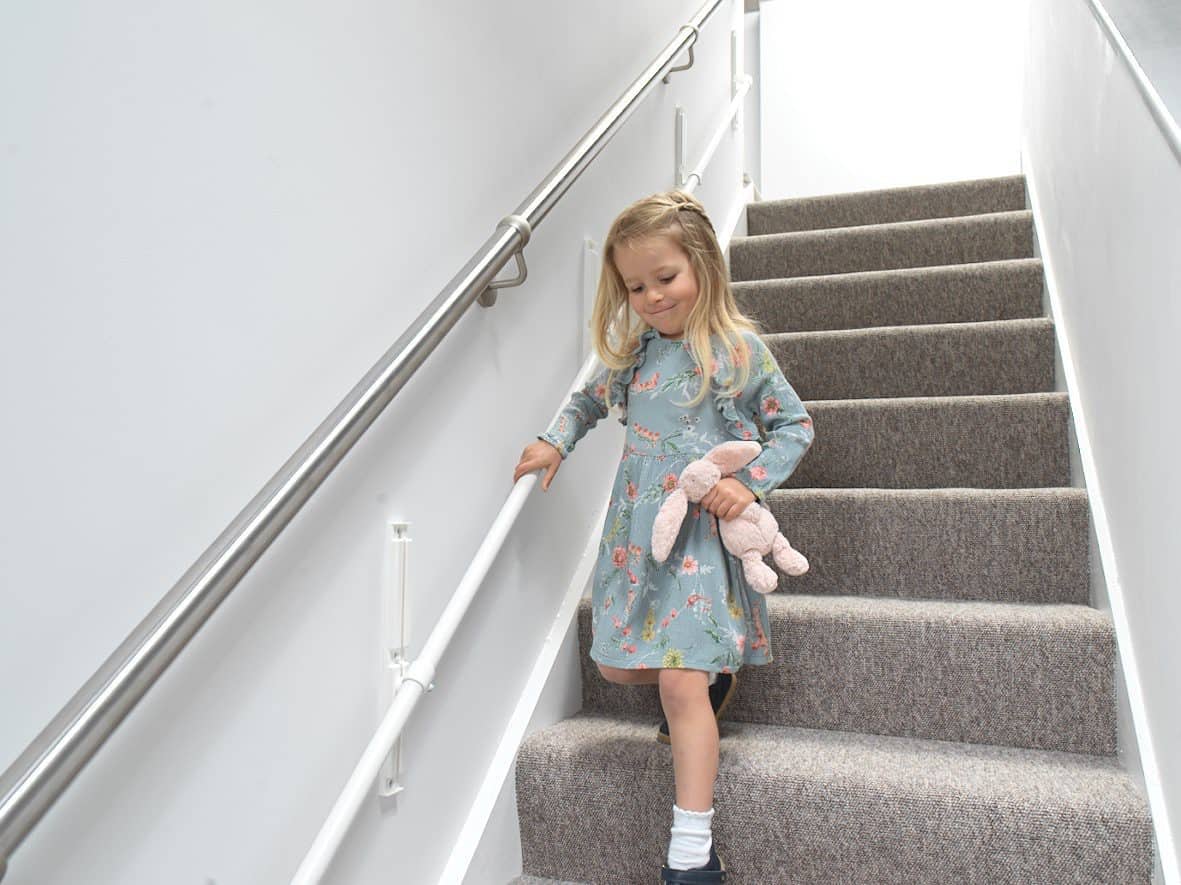
Standard handrails are built for adult hands and adult reach, which leaves toddlers and young children without proper support exactly when they need it most. A second, lower rail changes how a child climbs: instead of gripping a banister above shoulder height or nothing at all, they can hold something at a natural height and adjust their grip as their balance develops.
A national cohort study found handrail presence associated with lower odds of stair-fall hospital admission, reinforcing handrails as one of the more consistent structural protections identified in the research.
Key features to look for in a child-height adjustable handrail
Not every low rail is fit for purpose. A few features separate a genuinely useful child handrail from one that looks the part but does not hold up to daily use.
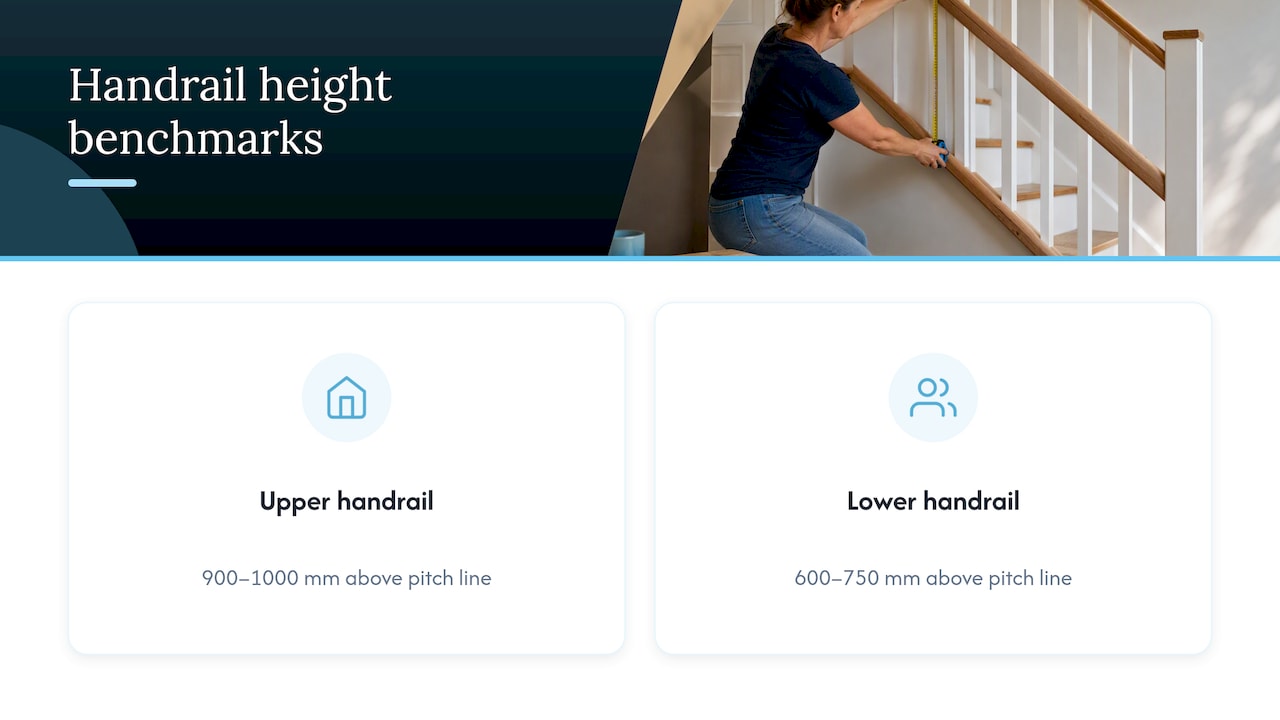
- Adjustable height range: look for a rail that can sit between roughly 600 and 750mm above the pitch line, matching early years design guidance for lower handrails, and that can be raised as the child grows.
- Grip diameter and finish: a rail that stays comfortable to hold whatever the room temperature, since cold metal can discourage children from gripping it properly.
- Mounting method: wall-fixed brackets or balustrade clamps that suit your stairs, with clear guidance on the wall strength or spindle spacing needed.
- Tested durability: manufacturer testing evidence for weight-bearing and long-term wear, rather than a rail sold purely on appearance.
- Extension compatibility: a modular design that lets you lengthen the rail later without buying a whole new system.
Pro Tip: Measure your child’s natural hand height while they’re standing on a mid-stair step, not on flat ground, since reach changes on an incline.
Installation basics and compatibility checks for common stair types
Most straight staircases can take an adjustable child handrail without major work, but it pays to check a few things before you order.
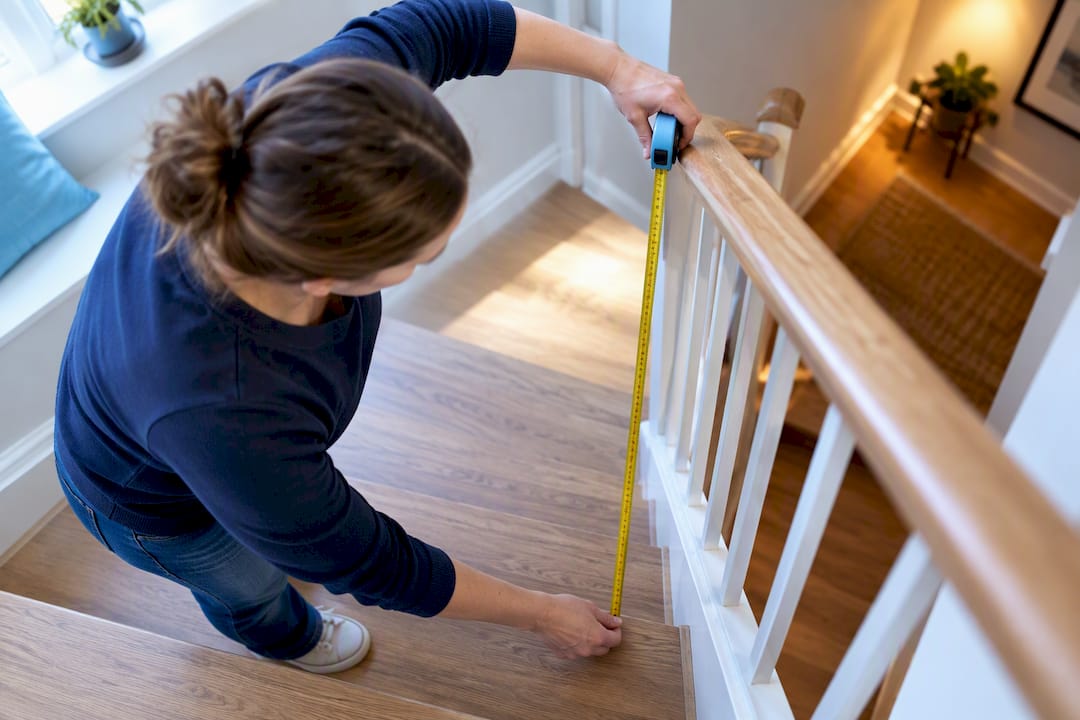
- Measure the pitch line from the top step to the bottom step, then count the total number of steps and note the landing distance at each end.
- Check for roughly 300mm of extra run beyond the first and last step, since rails should extend past both ends for visibility and continuous support.
- Inspect the wall or balustrade where fixings will attach, looking for solid plaster or masonry rather than plasterboard alone, or spindles strong enough to take a clamp.
- Flag unusual layouts, such as winders, spiral stairs or very narrow runs, as these often need a bespoke fit or a professional installer rather than a standard kit.
- Test the fitted rail by applying firm downward and outward pressure at several points along its length before letting a child use it unsupervised.
Older properties are worth a closer look before fitting anything new, since ageing housing stock can have narrower or steeper stairs and fixings that have weakened over time.
Extension packs and long flights: when you need one and how to plan for continuity
A standard adjustable handrail kit is built to suit an average domestic flight, but longer staircases, split-level runs or stairs with wide landings often need extra length. An extension pack adds a further section of rail with a connector that joins onto the main unit, keeping the height and grip consistent along the whole run.
- Measure the full run first, including any landings, so you know exactly how much extra length you need before ordering.
- Check connector compatibility, since an extension only works cleanly with the handrail system it is designed for.
- Keep roughly 300mm of overhang at both ends so the rail remains genuinely continuous rather than stopping short of where a child needs support.
- Consider multiple extensions or a professional assessment for particularly long or multi-flight staircases, where a single extension may not cover the whole distance safely.
Practical safety checklist for parents and childminders
A short list you can work through in one visit to the staircase:
- Take three measurements: the child’s standing reach on a stair, the full pitch length, and the distance beyond the top and bottom steps.
- Confirm the lower rail sits in the recommended range and that the grip feels comfortable rather than cold or slippery to a small hand.
- Check every fixing is tight and that the rail cannot be pulled away from the wall or balustrade under firm pressure.
- Keep the stairs themselves clear, use any stair gates properly at both ends, and avoid leaving toys or laundry on the treads or landing.
- Revisit the fitting every few months, retightening fixings and raising the rail as the child grows taller.
Evidence and KiddieRail proof points
KiddieRail designs an adjustable stair handrail specifically for young children, built to be raised in stages as a child grows rather than replaced. The KiddieRail Adjustable Child Stair Handrail has been through durability testing intended to confirm it holds up to daily gripping, pulling and knocks.
That approach sits alongside the wider evidence base: peer-reviewed research on stair falls in children under five points to handrails, alongside stair gates and clear landings, as one of the more consistent protective factors identified in the research.
Legal or regulatory standards related to child safety on stairs for childminders
Childminders and home childcare providers are generally expected to keep their premises reasonably safe for the children in their care, though the exact requirements depend on the regulator and jurisdiction a childminder is registered under. Rather than setting a single fixed handrail height as law, most frameworks describe a general duty to identify and reduce hazards, which in practice means checking stairs, gates and handrails as part of a routine home safety review.
Design guidance aimed at early years and childcare settings gives more concrete numbers to work from. It recommends an upper handrail around 900 to 1000mm and a lower handrail around 600 to 750mm above the pitch line, figures that give childminders a practical benchmark even where local regulation does not specify a height itself.
Because requirements vary by country and by regulator, a childminder should check the specific safety standards that apply to their own registration and premises rather than relying on general guidance alone. Fitting a compliant, well-measured handrail and keeping records of checks and maintenance is a sensible way to demonstrate that stair safety has been actively managed.
What one childminder noticed about a lower handrail
Adding a lower rail changed daily stair trips more than expected: fewer children asking to be carried, more of them holding on and taking each step themselves. An adjustable system meant not having to refit a new rail every year as the group of children using it changed height and age.
— Paul
The KiddieRail handrail and extension pack: what to check before ordering
The KiddieRail Adjustable Child Stair Handrail is built around the same criteria covered above: an adjustable height range, a grip designed to stay comfortable to hold, and tested durability for daily use in a busy household or childcare setting. It grows with a child rather than needing replacement, which makes it a longer-term fit for families and childminders alike.
Before ordering, have your pitch line length, step count and any landing distances ready, along with the age or height range you’re buying for. If your staircase is longer than a standard flight, the KiddieRail Extension Pack extends the rail to keep support continuous from top to bottom.
| Product | Best for | Price |
|---|---|---|
| KiddieRail Adjustable Child Stair Handrail | Standard straight staircases in homes and childcare settings | Available on request |
| KiddieRail Extension Pack | Longer flights or staircases needing continuous rail coverage | £24.99 to £36.99 one-off |
Sources
- Housing characteristics and hospital admissions due to falls on stairs: a national birth cohort study
- Steps, ramps, landings and handrails | Universal design for early learning and care settings
- Risk and protective factors for stair falls in children aged under five
FAQ
What height should a child handrail be fitted at?
Design guidance for early years settings recommends a lower handrail at roughly 600 to 750mm above the pitch line, alongside a standard upper rail. An adjustable rail lets you fit within that range and raise it as the child grows.
Do handrails actually reduce stair falls in children?
Yes, structural features including handrails are linked to fewer stair-fall injuries in children in national cohort research. Family and structural factors such as stair gates and landings show similar protective associations in case-control studies.
How far should a handrail extend beyond the top and bottom step?
Guidance recommends extending the rail around 300mm beyond the first and last step so it stays visible and gives continuous support right to the edge of the flight. An extension pack can add this length where the standard rail falls short.
Do I need an extension pack for a long staircase?
If your staircase run is longer than a standard flight or includes a wide landing, an extension pack keeps the rail continuous rather than stopping short. Measure the full run, including landings, before deciding how much extra length you need.
Are handrails enough on their own to keep children safe on stairs?
No single measure covers every risk. Stair gates, clear landings, non-slip treads and active supervision all work alongside a child-height handrail as complementary protections identified in the research on stair falls in young children.


