
Currently Empty: £0.00


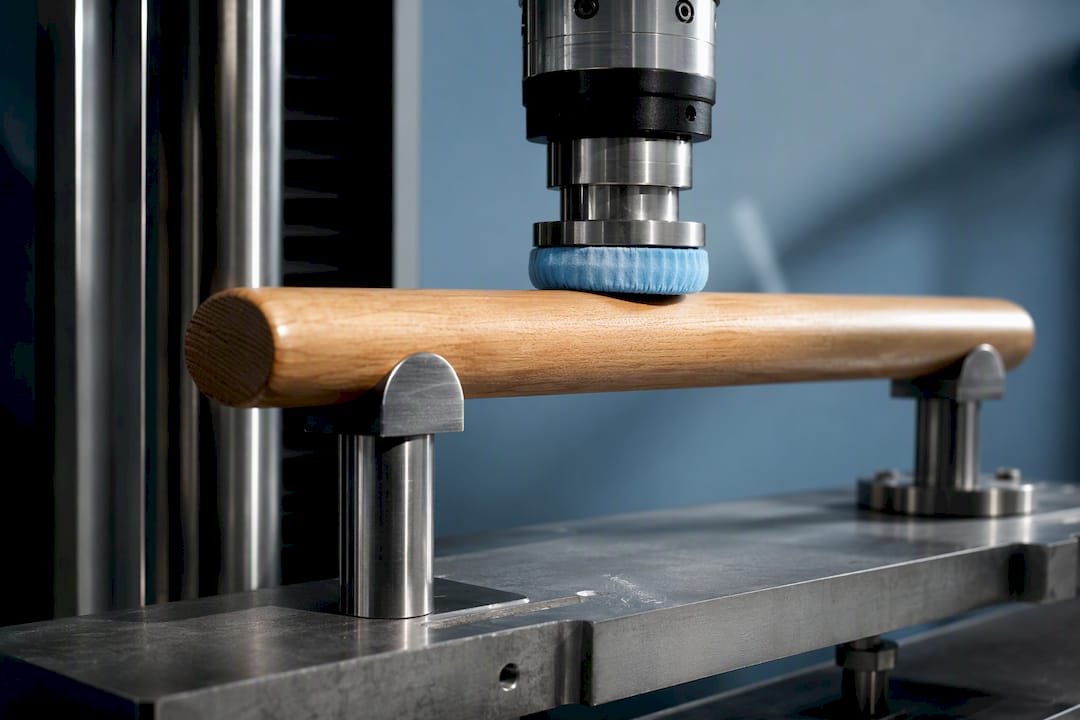
Documented durability testing is a reliable signal that a child stair handrail will hold up to daily use, provided the report names a specific protocol rather than making a vague claim. Look for three things: cyclic fatigue testing, impact testing and bracket pull-out figures. KiddieRail cites its own testing programme against these categories, which gives parents a concrete benchmark rather than a marketing line.
TL;DR:
- Documented durability testing for child handrails should specify protocols, cycle counts, and load figures to ensure long-term resistance to repeated use and impacts.
- Typical tests include cyclic fatigue, impact resistance, and static load testing, with thousands of cycles indicating a rail has absorbed months of child handling.
- To verify durability, check that product listings provide actual test protocols and results, rather than vague claims or marketing language.
- Material quality and fitting strength, especially the fixings and brackets, are vital factors in a handrail’s ability to withstand years of use.
- Regular maintenance, including monthly inspections and tightening fixings, extends a handrail’s lifespan beyond its initial testing.
Table of Contents
- What durability tests measure for adjustable child handrails
- Common test methods used on children’s handrail products
- How to interpret test results and labels on product pages
- What to look for in handrail materials and fittings that affect long-term durability
- Inspection, maintenance and simple at-home checks to prolong durability
- KiddieRail’s testing and what the results mean for parents
- Reading test reports without overthinking the budget
- Where to buy KiddieRail and next steps
- Sources
- FAQ
What durability tests measure for adjustable child handrails
A lab test is trying to find out how a handrail fails, not just whether it looks sturdy on day one. The common failure modes for a child-height rail are material fatigue in the rail itself, cracking or loosening at the bracket joints, wear on the grip surface from small hands, and corrosion or UV damage if the rail sits near a window or is fitted outdoors.
Test reports translate these failure modes into numbers: cycles to failure, static load at failure, deflection under weight, and a pass or fail result against a named protocol. These figures matter for a child handrail because the stress pattern is different from an adult rail. A toddler grabs, tugs, swings and slides their palm along the rail dozens of times a day, and a young child leaning their full weight on one small section repeats a very specific kind of load that a single static test won’t catch.
- Material fatigue shows up as flex or cracking after repeated cyclic loading rather than one heavy knock.
- Bracket and joint failure is usually the first thing to go, since fixings absorb the repeated pulling and rattling a child produces.
- Grip surface wear affects how secure a child’s hand feels on the rail over months of use, not just on day one.
Common test methods used on children’s handrail products
Lab reports on children’s products tend to follow a small set of recognised protocols, and knowing what each one checks helps you read a spec sheet properly.
- Cyclic or rattle testing, of the kind FIRA International describes for children’s furniture, runs a rattle machine at a set speed for thousands of repetitions to simulate months of handling in a short lab session.
- Impact testing applies a sudden force to the rail and its fixings to check whether a single hard knock, such as a child falling against it, causes structural failure.
- Static load testing hangs or presses a fixed weight against the rail to measure deflection and the load at which the structure or bracket gives way.
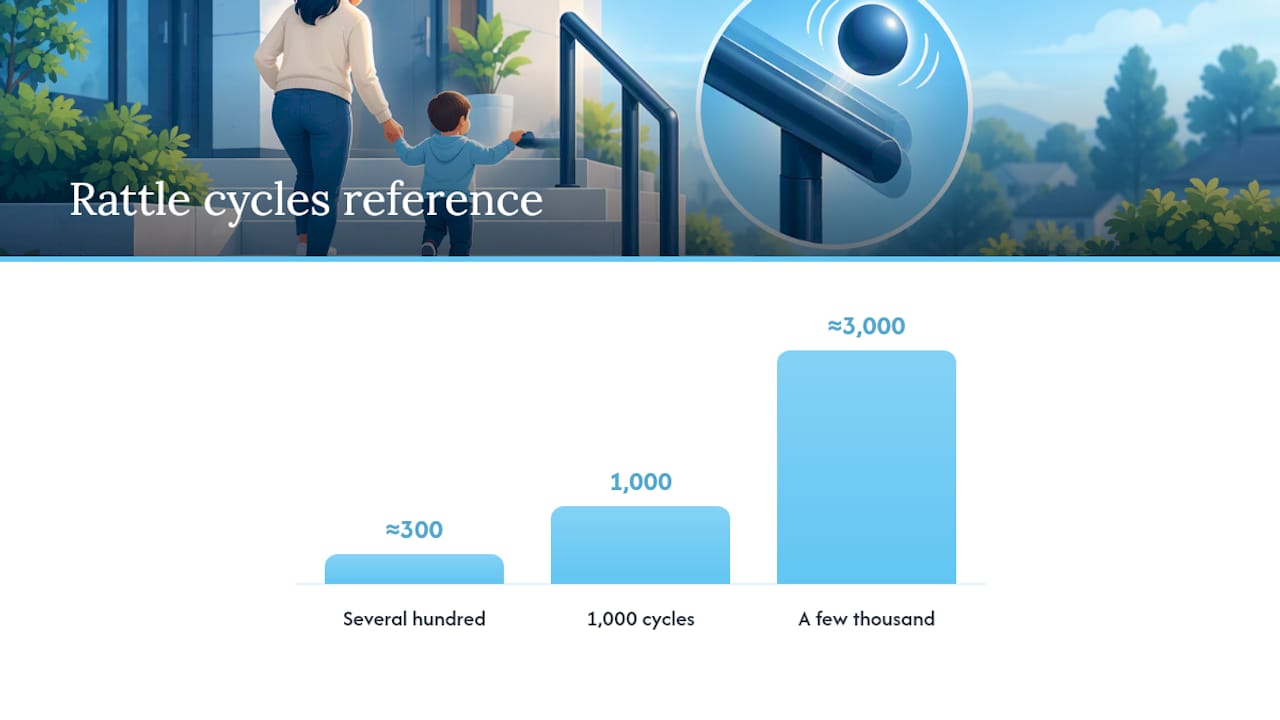
FIRA’s published stair-gate testing note describes a rattle machine set to 120 RPM running for several hundred to a few thousand cycles, tested against the main British, European and American standards for childcare products, FIRA notes. That figure is a useful reference point: a rail that has been through thousands of rattle cycles has effectively absorbed the equivalent of many months of a child tugging and shaking it before it ever reaches your staircase.
Translating lab cycles to home use is not exact. A thousand cycles in a controlled machine test does not map neatly onto “a year of use” for every household, since usage varies with the number of children, how often they use the stairs and how they handle the rail. Treat cycle counts as a comparison tool between products rather than a countdown clock for your own rail.
How to interpret test results and labels on product pages
Product pages vary wildly in how much detail they give, and the gap between a vague claim and a documented one is where you should focus your attention.
- Prioritise listings that name a specific protocol, cycle count or load figure over those that simply say “tested” or “durable”.
- A cycle count (how many times the rail was rattled or loaded before failure) tells you about long-term fatigue resistance.
- A load figure in kilonewtons or kilograms at the point of failure tells you about one-off impact resistance, such as a fall.
- Treat “heavy-duty” or “premium” as marketing language unless it’s attached to a number you can check.
- Be cautious of listings with no testing information at all, since silence on this point usually means the manufacturer hasn’t run the test rather than that the rail passed quietly.
When comparing two products that report different types of data, standardise mentally: one rail’s cycle count and another’s load-at-failure figure aren’t directly comparable, so look for whichever one reports both, or judge each product against its own stated protocol rather than against the other’s number.
Pro Tip: Ask the retailer directly for the test report or certificate number if the product page only mentions testing in passing; a manufacturer with real results usually has no trouble sharing them.
What to look for in handrail materials and fittings that affect long-term durability
The test result is only half the picture. The materials and fittings used in the rail determine whether that result holds up in your home over years rather than months.
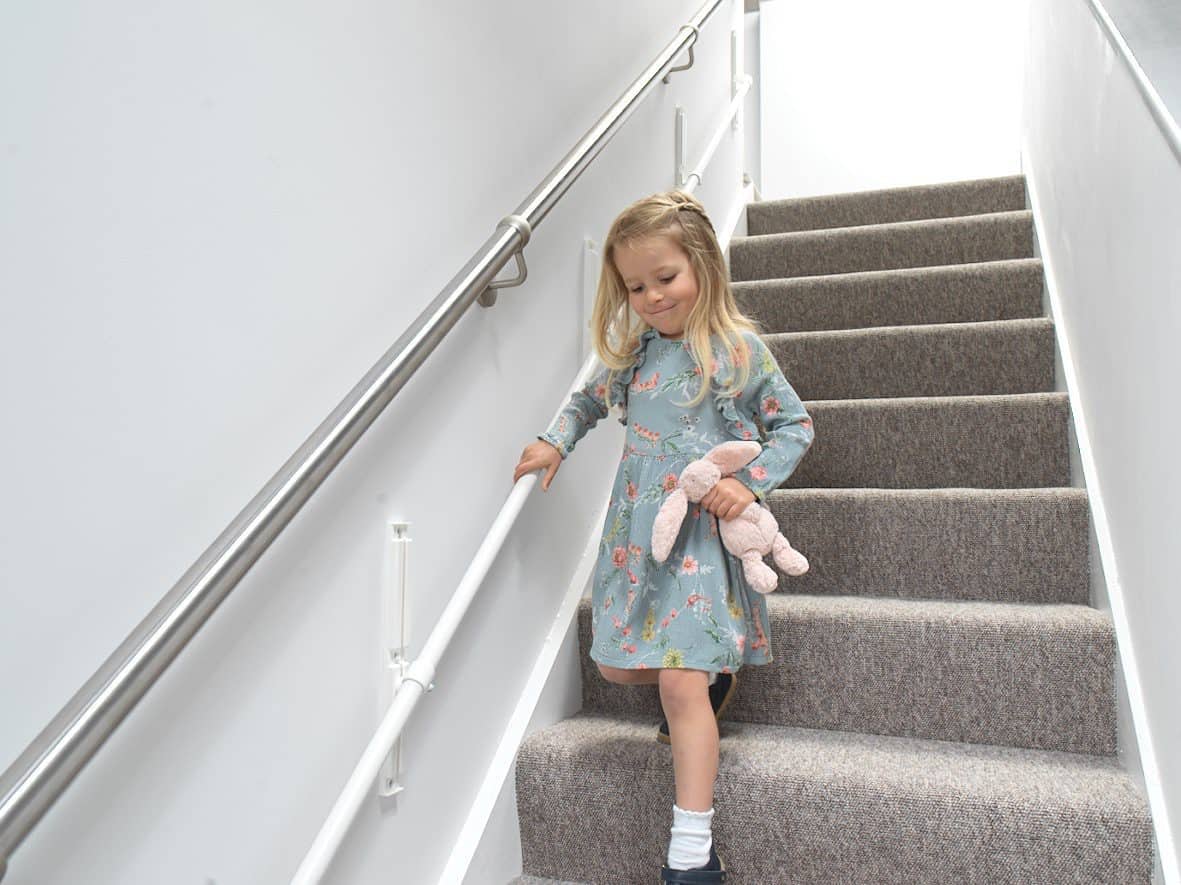
- Choose a gripping profile made from a material that resists surface wear and doesn’t degrade under UV if it will sit near a window.
- Check the structural material of the rail itself, since a rail that flexes excessively under a child’s weight will loosen its fixings faster.
- Look at how many fixings the bracket uses and whether the fasteners are rated for the wall or banister type in your home. Scottish building guidance on domestic stairs points to continuous gripping surfaces and secure extensions beyond the flight as features that matter for both durability and everyday safety, as Gov.
- Confirm that a smooth, consistent surface finish is used across the whole rail length, since rough joins are usually the first place wear shows.
- Check whether the brand sells extension packs or replacement parts, since a rail that can be extended or repaired outlasts one that has to be replaced whole.
Inspection, maintenance and simple at-home checks to prolong durability
A well-tested rail still needs upkeep. WorkSafe’s guidance on stairs treats regular inspection and maintenance as central to keeping a handrail safe over its working life, and the same logic applies at home.
- Check monthly for visible cracks, splits or discolouration along the rail and at the joints.
- Push and pull each bracket by hand to feel for play or movement where it meets the wall or banister.
- Apply firm downward pressure along the rail’s length to check it doesn’t flex or shift under a load similar to a child leaning on it.
- Wipe the rail down regularly and re-tighten any fixing that has loosened rather than waiting for it to fail.
- Call in a professional if you find structural cracking, a bracket that won’t stay tight after re-tightening, or any movement in the wall fixing itself.
Pro Tip: Set a reminder to check fixings every school term rather than relying on memory, since loosening tends to happen gradually and goes unnoticed until it’s obvious.
KiddieRail’s testing and what the results mean for parents
KiddieRail’s handrail has gone through FIRA testing protocols aimed specifically at children’s products, covering the cyclic and impact style checks described earlier rather than a single one-off test. That approach is designed to catch the failure modes that matter most for a child rail: repeated small-hand grabbing, tugging and leaning over months of daily stair use.
- The rail is adjustable, so it grows with the child rather than being replaced as they get taller.
- Testing focused on the joints and fixings that see the most repeated stress from a child’s grip and weight.
- The product is detailed on KiddieRail’s own product page, which lists the testing claim alongside the adjustable design.
The product listing states the rail underwent durability testing before release, according to KiddieRail, which gives parents a documented reference point rather than a general assurance. Mapped against the failure modes covered above, that kind of testing is aimed squarely at the bracket loosening and grip wear that a child’s daily handling tends to produce first.
Reading test reports without overthinking the budget
If I had to trust one figure, it would be the bracket pull-out or fixing strength result, since that joint fails before the rail material usually does. A cheaper rail with solid, well-documented fixings often outlasts a pricier one with vague testing claims. Correct installation matters just as much as any lab result: a well-tested rail fitted loosely will fail regardless of its certificate.
— Paul
Where to buy KiddieRail and next steps
Documented testing only helps if the product behind it is built for the way children actually use stairs, which is why KiddieRail’s adjustable design and FIRA-tested fixings are worth a closer look rather than a rail with no test information at all.
You can browse the KiddieRail Adjustable Child Stair Handrail directly, or view the full product listing and testing details. As your child grows, a KiddieRail Extension Pack, priced between £24.99 and £36.99, extends the rail’s coverage without needing a full replacement. Installation is designed for straightforward self-fitting, and further guidance on stair safety for toddlers is available if you want to pair the rail with wider household precautions.
Sources
FAQ
What does a durability test actually check on a handrail?
A durability test checks how a handrail holds up under repeated use and sudden force, looking at fatigue in the material, movement at the bracket joints and wear on the grip surface. Reports usually give this as cycles to failure or a load figure at the point of failure, as described in FIRA’s testing resources.
How many test cycles indicate a durable child handrail?
There’s no single universal cycle count that guarantees durability, since it depends on the protocol used and the rail’s construction. FIRA’s published stair-gate testing note describes a rattle machine run at 120 RPM for a number of cycles typically around 1,000 as a benchmark used in children’s product testing, according to FIRA.
Does a tested handrail still need regular maintenance?
Yes, a tested rail still needs routine checks, since ongoing wear and loosening happen gradually after the rail leaves the lab. WorkSafe’s guidance treats regular inspection and maintenance as essential to keeping any stair handrail safe over time.
Has KiddieRail’s handrail been tested for durability?
Yes, KiddieRail states its adjustable child stair handrail underwent FIRA testing protocols aimed at children’s products before release, covering the cyclic and fixing checks relevant to daily handling. Full details are listed on the KiddieRail product page.
What’s the difference between impact testing and cyclic testing?
Impact testing measures how a rail and its fixings handle a single sudden force, such as a fall against it, while cyclic testing repeats a smaller action thousands of times to simulate months of everyday handling. Both matter for a child handrail, since children produce both types of stress on a regular basis.


