
Currently Empty: £0.00


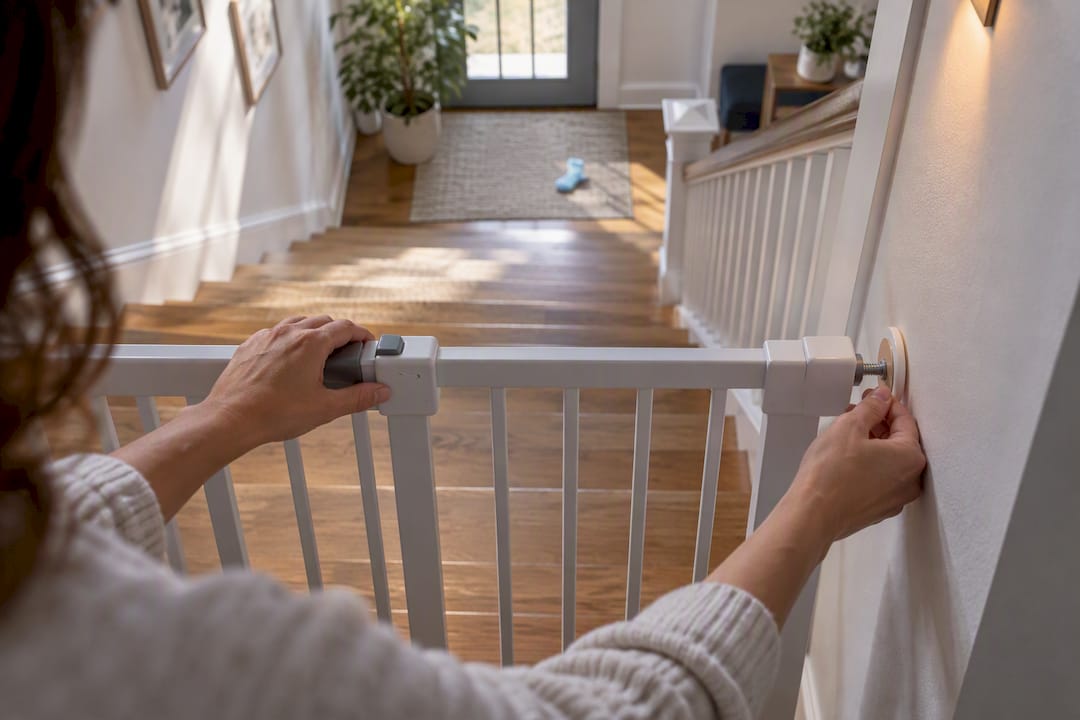
Six actions matter more than any other on a babyproofing checklist this year: fit a hardware-mounted gate at the top of your stairs, anchor heavy furniture and TVs to the wall, fit magnetic locks on any cabinet holding cleaning products, swap loose outlet covers for tamper-resistant ones, turn the water heater down to a safe moderate temperature recommended to reduce scald risk, and clear cords and small objects from the floor. These six cause the most severe injuries when skipped, and everything else on a full room-by-room list can wait a week. The age and room breakdowns below tell you exactly when and where to tackle the rest.
TL;DR:
- Installing a hardware-mounted gate at the top of stairs and anchoring heavy furniture reduce the most severe injury risks for young children.
- Babyproofing measures should be reassessed at every developmental milestone, from newborn stage to toddlerhood, to address changing hazards.
- Room-specific checks, like securing furniture, covering outlets, and locking cabinets, are essential for effective safety but should be done systematically by room.
- The most common serious injuries stem from falls, tip-overs, ingestions, and scalds, making targeted safety features like wall straps, cabinet locks, and water temperature controls crucial.
- Starting babyproofing early, ideally before six months, and prioritizing key safety devices can help prevent accidents before children become mobile.
Table of Contents
- Which safety steps matter at each developmental stage?
- What does a room-by-room babyproofing checklist look like?
- Which hazards cause the most serious injuries?
- Why do stairs need more than just a gate?
- When should you start babyproofing, and what will it cost?
- What’s a quick two-minute room sweep before you leave a baby unsupervised?
- A note on balancing safety with everyday family life
- Where an adjustable handrail fits into your stair safety setup
- Where to check the official guidance yourself
- Sources
- FAQ
Which safety steps matter at each developmental stage?
Babyproofing done too early wastes money on gear that sits unused; done too late, it misses the window before a baby can actually reach the thing you meant to protect them from. Hospital safety programmes recommend reassessing your setup at every developmental milestone, because the hazards that matter change fast as mobility increases.
- Newborn (0 to 5 months): get the sleep space right first. A bare crib with a firm mattress and no bumpers, loose bedding or soft toys, monitor cords routed well away from the cot, working smoke and carbon monoxide alarms, and heavy furniture anchored before it becomes a climbing hazard.
- Crawlers (6 to 9 months): fit outlet covers throughout, install lower-cabinet locks or move anything toxic up high, put gates in place at stairs and any off-limits rooms, and do a floor sweep for coins, button batteries and anything smaller than a toilet roll tube.
- Cruisers and pull-to-standers (9 to 12 months): add corner guards on sharp furniture edges, stove knob covers, a hardware-mounted gate at the top of the stairs specifically, and window stops or guards on any window a child could reach once standing.
- Walkers and toddlers (12 months plus): secure exterior doors and fit locks higher than a toddler can reach, lock medicines in a proper box rather than a high shelf, and start teaching simple rules such as “we hold the rail,” while keeping every physical barrier in place. Rules alone don’t work at this age; barriers and supervision still do the heavy lifting.
What does a room-by-room babyproofing checklist look like?
Working through one room at a time, rather than buying a generic kit and hoping it covers everything, is the fastest way to avoid gaps. Here’s what each room actually needs.
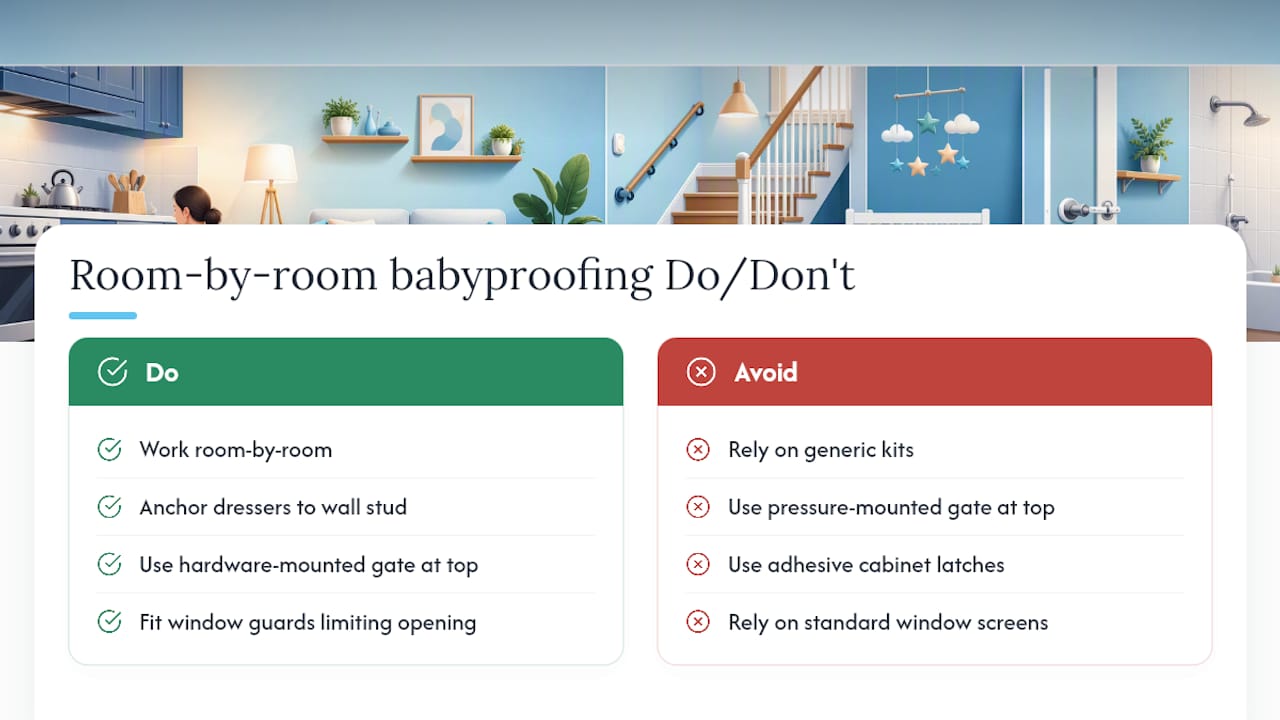
Nursery: check the crib meets current safety standards, firm mattress, no bumpers, no pillows. Route monitor and blind cords well clear of the cot, and anchor the dresser or changing table to the wall stud.
Living room: mount the TV to the wall or fit an anti-tip strap rather than resting it on a low unit. Add corner guards to coffee tables, move breakable ornaments up, and tuck away trailing lamp and charger cords. Loose rugs on hard floors are a fall risk for new walkers too.
Kitchen: magnetic locks on lower cabinets work better than adhesive latches, which toddlers work out within weeks. Add stove knob covers, a fridge latch, move cleaning chemicals to a high shelf regardless of the locks, and fit a lid lock on the bin.
Bathroom: a toilet lock, non-slip mats in the bath, and medicines moved out entirely rather than just locked in the cabinet above the sink. Water temperature safety belongs here too, not just at the boiler.
Stairs: a hardware-mounted gate at the top, never a pressure-mounted one, which can be pushed loose from above. A pressure gate is fine at the bottom of a short flight. Beyond the gate, a child-height or adjustable handrail solution gives a toddler something to actually grip while learning to climb, rather than just something stopping them.
Outdoors and balconies: self-closing, self-latching gates around any pool, balcony guards where railings are wide enough to slip through, and garden tools or chemicals locked away rather than left in an open shed.
Pro Tip: Standard window screens will not stop a fall. Fit window guards or stops that limit the opening to four inches or less, and make sure at least one window per room still opens fully for fire escape.
Which hazards cause the most serious injuries?
CDC injury surveillance data consistently rank falls, tip-overs and ingestions among the leading causes of emergency visits for children under five. That’s the reason these five sit at the top of every serious checklist rather than further down:
- Furniture tip-overs: anchor to wall studs with rated straps, not just adhesive strips, and check the fixings annually.
- Button batteries and small magnets: store locked and completely out of reach; treat suspected ingestion as an emergency and seek help immediately.
- Poisons: magnetic or keyed locks on cabinets holding cleaning products, plus a proper lockbox for medicines rather than a high shelf.
- Scalds: the Children’s Hospital of Philadelphia notes water at 140°F (60°C) can cause a third-degree burn in around three seconds, against roughly ten minutes at 120°F (49°C). Turning the heater down is a five-minute fix with an outsized payoff.
- Stairs: hardware-mounted gates at the top, decent lighting on every step, and a handrail solution sized for a child’s grip.
Why do stairs need more than just a gate?
Falls remain one of the most common reasons young children end up in an emergency department, and stairs are where the worst of them happen. A gate solves half the problem: it stops a baby reaching the stairs unsupervised. It does nothing for the toddler who’s already old enough to be climbing them with you, holding a handrail built for an adult’s hand rather than theirs.
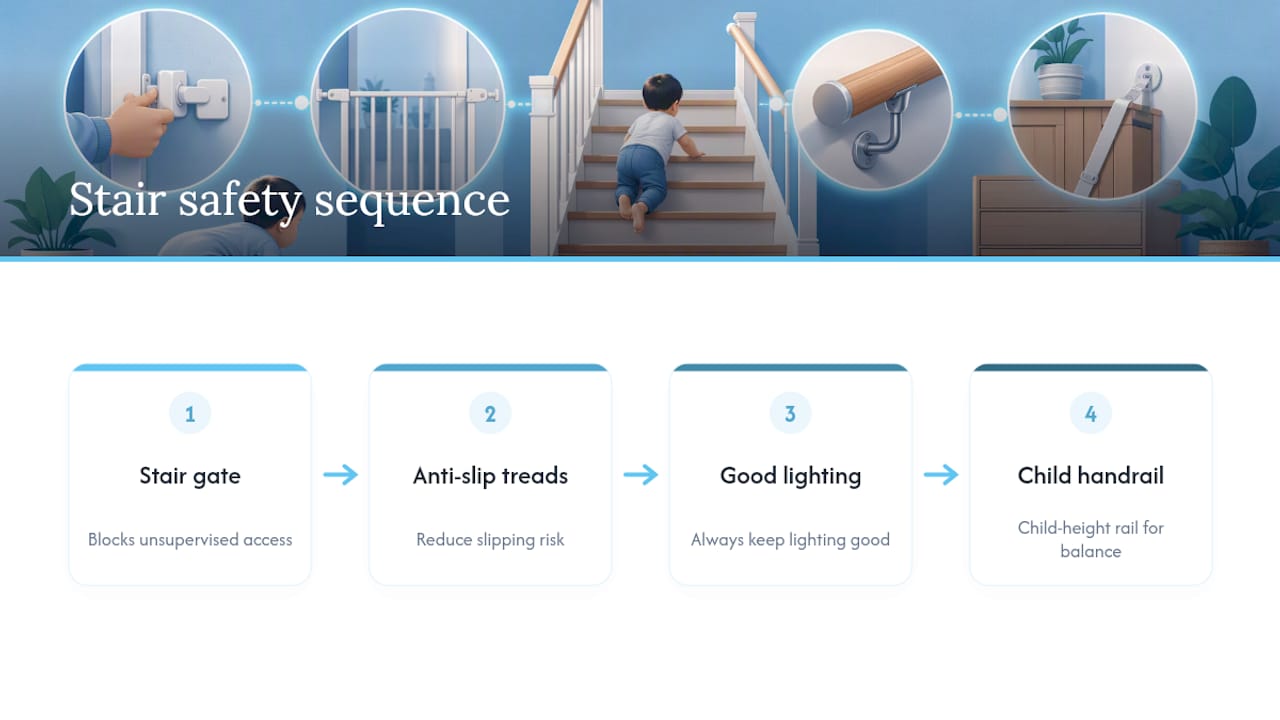
The sequence that works in practice: gate first, anti-slip treads next, good lighting always, then a child-height handrail once your toddler is actively learning to use the stairs rather than being kept off them entirely. That’s where KiddieRail’s adjustable handrail fits. It’s designed to sit below a standard handrail at a height a toddler can actually grip, and it adjusts as they grow rather than being replaced every year. It’s built to support a child’s balance while they climb, which is a different job to a gate that simply blocks access. Fit it below your existing rail, following the installation guide exactly, and recheck the fixings periodically the same way you would any anchored hardware. Stairgates alone rarely solve the whole problem once a child is mobile enough to be using the stairs with supervision rather than being kept away from them.
Pro Tip: Re-tighten every stair fixing, gate hinge and handrail bracket every few months. Wood and plasterboard settle, screws work loose, and a device that was solid in January can be wobbly by summer.
When should you start babyproofing, and what will it cost?
Start before your baby is mobile. Most paediatric safety programmes recommend having the highest-risk items in place by around 4 to 6 months, which means beginning the work during pregnancy or shortly after birth rather than waiting for the first crawl.
Costs vary widely depending on how much of the work is DIY. Small items such as outlet covers, corner guards and cabinet locks typically run £5 to £30 each. Hardware-mounted gates and proper furniture anchoring kits sit closer to £30 to £150 depending on quality and staircase width. Professional installation adds more on top of that.
- Buy a general starter kit for the small items, but don’t let it distract you from the big three: furniture anchors, magnetic cabinet locks, and a hardware-mounted gate.
- Prioritise spending on anything that prevents a tip-over, poisoning, or stair fall before anything cosmetic.
What’s a quick two-minute room sweep before you leave a baby unsupervised?
Even a fully babyproofed room needs a fast visual check, because toys, cups and other objects migrate back onto floors within hours.
- Anchor points secure and heavy furniture still flush to the wall.
- Gate closed and latched properly.
- Cabinet and drawer locks engaged, not just present.
- Outlets covered.
- Cords tucked away and out of reach.
- Water heater still set to 49°C (120°F).
- No small objects, coins or batteries on the floor.
- Medicines and vitamins locked away, not left on a counter.
- Windows locked or guards in place.
- Pet food, litter trays and chemicals out of reach.
Scan low, check behind furniture, run a hand along cord routes, and glance at the floor before you sit down or step out. It takes less time than making a cup of tea.
A note on balancing safety with everyday family life
Trying to babyproof everything at once is how parents burn out before the baby even starts crawling. Stage it by milestone, check devices work as intended every few months, and remember that supervision does the job no gadget fully replaces.
— Paul
Where an adjustable handrail fits into your stair safety setup
A gate keeps a toddler off the stairs. It does nothing once they’re old enough to be climbing them with you, gripping a rail built for an adult hand. That gap is exactly what the KiddieRail Adjustable Child Stair Handrail is built to close.
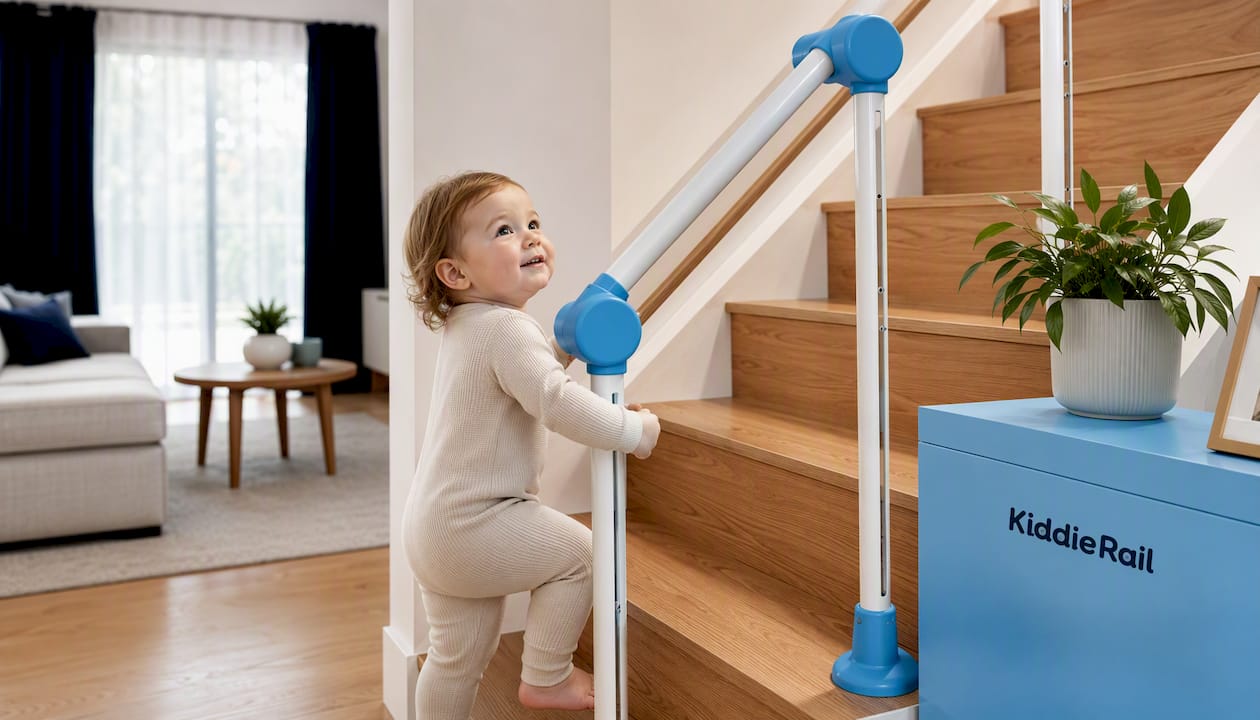
It fits below your existing handrail at a height sized for a child’s grip, and it’s tested for durability so it holds up to years of daily use rather than a single winter. Because it adjusts as your child grows, it’s a longer-term fixture than most stair safety products, which get outgrown within a year. For wider staircases or homes with more than one flight, the Extension Pack (£24.99 to £36.99, one-off) extends coverage without buying a second unit. Browse the full range on the KiddieRail shop and fit yours before your toddler starts tackling the stairs solo.
Where to check the official guidance yourself
For primary sources beyond this checklist: the CPSC’s childproofing guide, the NHS baby and toddler safety pages, and the EPA’s lead safety guidance for older properties.
Sources
- Children’s Hospital of Philadelphia — Burn prevention
- CPSC — Childproofing your home
- NHS — Baby and toddler safety
- CDC WISQARS injury data
- EPA — Protect your family from lead in your home
FAQ
When should you start babyproofing?
Start during pregnancy or in the first few months, aiming to have the highest-risk items, furniture anchors, cabinet locks and stair gates, in place by 4 to 6 months, before crawling begins. Waiting until a baby is already mobile means racing to catch up on the most dangerous gaps.
How much does babyproofing cost?
Small items like outlet covers and corner guards typically cost £5 to £30 each, while hardware-mounted gates and furniture anchoring kits run £30 to £150. Prioritise the anchors, locks and gates first, then fill in smaller items as budget allows.
What should I include on my baby preparedness checklist?
Cover safe sleep basics, furniture anchoring, stair and window safety, cabinet and medicine locks, and smoke and carbon monoxide alarms as the foundation. From there, work room by room rather than trying to buy one kit that covers everything at once.
What are some good items for baby proofing my home?
Hardware-mounted stair gates, furniture anchor straps, magnetic cabinet locks, tamper-resistant outlet covers, and window guards or stops cover most high-risk areas. For stairs specifically, an adjustable child handrail that sits below the main rail gives a toddler something sized to their own grip once they start climbing with supervision.


