
Currently Empty: £0.00


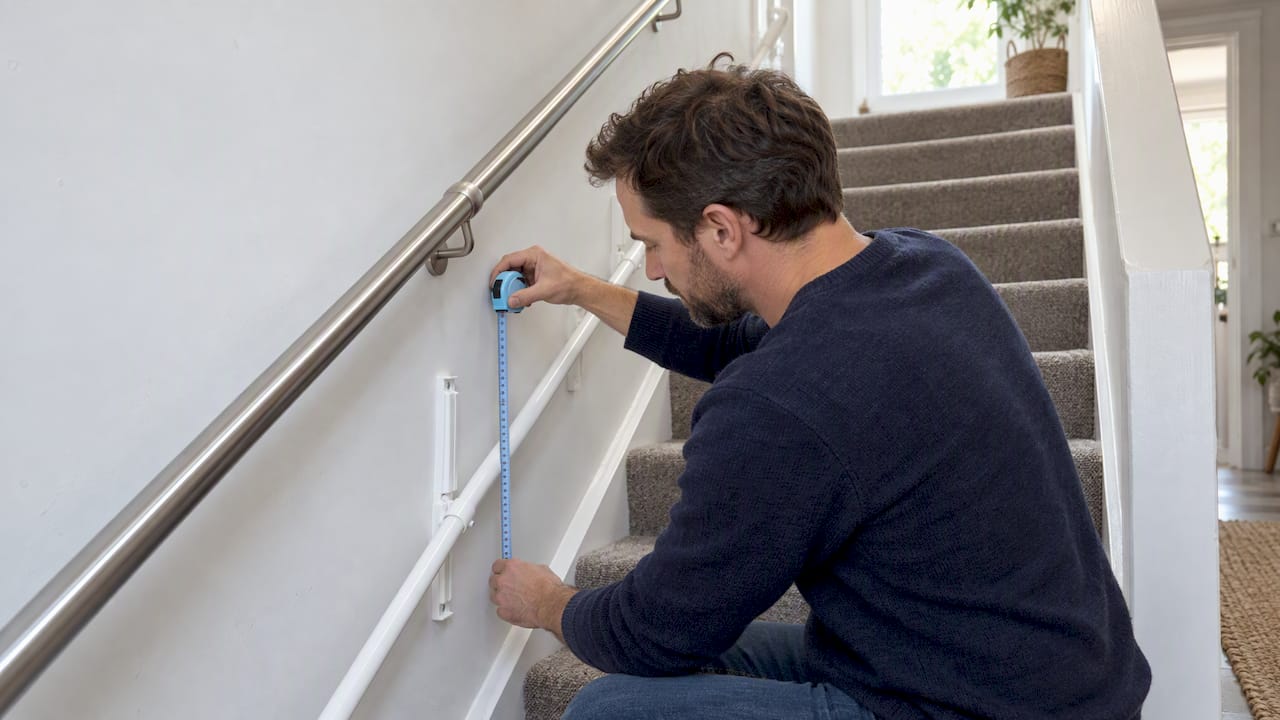
An adjustable banister-mounted child handrail is one of the simplest ways to give a toddler a secure, correctly positioned grip on household stairs, and KiddieRail is a ready example of this kind of product. It fits beneath an existing adult handrail and suits most straight staircases, though tight spirals and unusual balustrade shapes need extra checking before purchase.
TL;DR:
- Choose an adjustable child handrail that covers a height range suitable from early walking to older children to ensure longevity and safety as your child grows.
- Confirm the grip profile is small, smooth, and free of sharp edges, with around a 9-inch gap to prevent finger or arm entrapment.
- Measure your staircase’s banister height, width, post shape, and total run length to verify the product’s compatibility and needed extension packs before purchasing.
- Ensure the product listing states a clear warranty and durability testing to avoid cheap, poorly built options that may not last over time.
- Use a layered safety approach with a lower handrail, stair gates, supervision, and clear stairs, as no single measure fully prevents stair fall injuries.
Table of Contents
- Key features that separate a good child handrail from a poor one
- How to measure your banister before you buy
- What the safety evidence says about child-height rails
- A quick checklist for choosing the right rail
- Why KiddieRail fits this checklist
- Why a rail works best as part of a routine, not a standalone fix
- FAQ
- Sources
Key features that separate a good child handrail from a poor one
The whole point of a second rail is height. Adults grip a handrail at roughly waist level, but a toddler’s reach is far lower, so a fixed-height rail may not suit younger children and may become less useful as the child grows; this highlights the importance of choosing a rail with a bed height for seniors and caregivers consideration to ensure appropriate and comfortable grip levels. An adjustable rail accommodates changes in height as the child develops.
Grip matters just as much as height. A handrail needs a profile small hands can close around fully, with no sharp edges or ridges that catch fingers. Guidance on accessible stairways recommends keeping this in mind for any handrail intended for children, alongside a clear minimum gap between the upper and lower rail so a child’s head or arm cannot become trapped, generally cited as around 9 inches (230mm).
Material choice affects both grip and lifespan. Look for a combination that resists wear from small, often damp hands and does not become slippery when polished by years of use. A product listing for KiddieRail notes aluminium and ABS construction, chosen for durability rather than looks alone, with an install time of roughly 45 to 60 minutes.
When you check a product page, confirm:
- The adjustable height range and whether it covers toddler through to older child use.
- The grip diameter and whether it is described as suited to small hands.
- The materials used and whether they are listed as durable and non-slip.
- Whether extension packs are sold separately and what lengths they add.
- Whether a manufacturer warranty or durability testing claim is stated.
Pro Tip: Measure your total stair run before browsing, so you can tell at a glance whether a base kit or a base kit plus an extension pack will cover your staircase.
A manufacturer warranty combined with a stated testing process is one of the clearer signals that a child handrail has been built to last rather than assembled cheaply.
How to measure your banister before you buy
Getting the fit right starts with a tape measure, not a product page. Before ordering anything, take these measurements:
- The vertical distance between your existing adult handrail and the stair nosing, so you know how much space the child rail has to work with.
- The width and shape of your banister, including whether posts are round, square or decoratively profiled.
- The spacing between existing balusters or posts, which affects bracket placement.
- The total run length of your staircase, from top to bottom, to work out whether you need an extension pack.
Measure at the nosing of each step rather than at the tread centre, since a difference of even a few millimetres can shift where brackets sit and whether a standard extension length is enough, according to product specification notes from a KiddieRail listing.
Not every staircase suits this kind of rail. Tight spiral staircases, very narrow winders, and staircases with unusual glass or decorative balustrade profiles can make flush bracket mounting difficult or unsafe.
For installation itself, expect to need:
- A drill, screwdriver, spirit level and the fixings supplied with the kit.
- Around 45 to 60 minutes for a standard straight run.
- A second pair of hands if your staircase is long or you are fitting an extension pack at the same time.
If your banister has decorative newel posts or large chamfers where brackets cannot sit flush, a shallow auxiliary plate or a slightly different bracket position usually resolves it, rather than ruling the rail out entirely.
What the safety evidence says about child-height rails
A UK multicentre case-control study found that falls from stairs accounted for 18% of emergency department attendances for falls among children under five, with the absence of stair gates identified as a significant risk factor. The same body of research, published in Archives of Disease in Childhood, reports population attributable fractions of between 5% and 24% for individual modifiable stair features such as gates, carpet condition and landing design.
Keeping stair gates closed could prevent a substantial share of stair fall injuries in young children, assuming the association is causal.
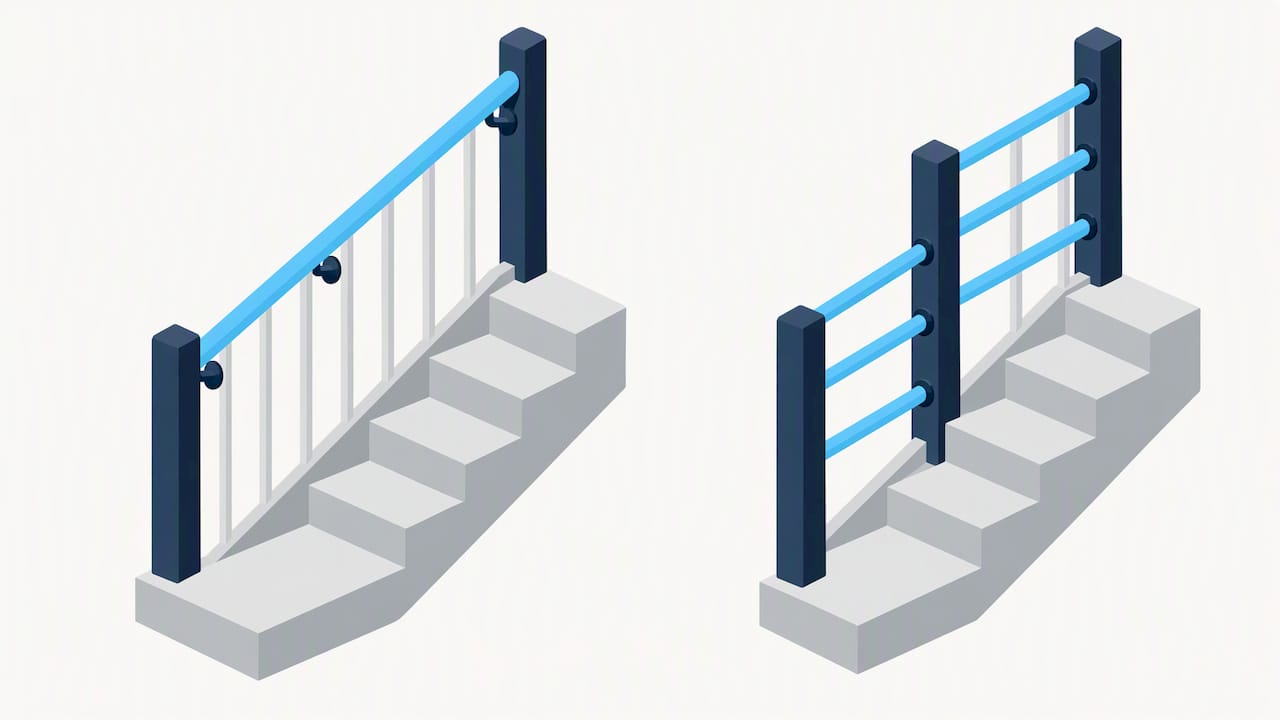
This is why a child handrail is best understood as one part of a layered approach rather than a replacement for a gate. Architectural accessibility guidance on stairways recommends a second, lower handrail where children are regular users, alongside the same 230mm clearance principle mentioned above to avoid entrapment risk.
A separate review of guardrail and handrail code provisions warns against horizontal or step-like elements on a rail system, since these create what is sometimes called a ladder effect, giving a child something to climb rather than simply hold. A continuous, unbroken grip surface with secure fixings avoids this, according to a review of guardrail code excerpts. These standards are part of why testing and warranty claims matter when you are comparing child handrail products rather than treating them as marketing extras.
A quick checklist for choosing the right rail
Before you commit to a specific model, run through a short mental checklist: does the height range actually suit your child now and as they grow, does the bracket system suit your stair type, do you feel confident installing it yourself, are extension packs available if your run is long, and does the listing state a clear warranty or testing claim.
| What to check | Why it matters |
|---|---|
| Age and height fit | A rail that only suits toddlers stops being useful within a year or two |
| Stair type compatibility | Spirals and unusual balustrades may not accept standard brackets |
| Installation confidence | Most kits are self-fit in under an hour with basic tools |
| Extension options | Longer runs need additional length rather than a second full kit |
| Warranty and testing claims | A stated warranty is a practical sign of build confidence |
A few red flags are worth watching for on any product page: no clear mounting specification, no warranty mentioned at all, a grip profile described only in vague terms, or a return policy that is not spelled out. On cost, it is usually cheaper over time to buy a base kit plus an extension pack as your staircase or family needs change, rather than replacing an entire rail system later.
- Confirm the exact height range before buying, not just “adjustable”.
- Ask whether extension packs are sold separately and at what length.
- Check for a stated warranty period in writing, not just implied durability.
Why KiddieRail fits this checklist
We offer a fully adjustable rail that grows with a child, tested for durability, and designed to fit most standard UK staircases without specialist tools. Installation typically takes around 45 to 60 minutes, and the product comes with a manufacturer warranty.

For straight staircases, the base KiddieRail Adjustable Child Stair Handrail covers most homes on its own. For longer runs or stairs with a half-landing, we sell two extension packs: an 85cm extension and a 170cm extension, so you add length rather than buying a second full kit. Extension pack pricing sits between £24.99 and £36.99 one-off, depending on length, through our accessories range.
Before you buy, check:
- Your stair type against the compatibility notes on each product page.
- Whether your run needs one extension pack or two.
- The full handrail range if you want to compare the base kit and accessories together.
Why a rail works best as part of a routine, not a standalone fix
A handrail at child height does two things at once: it reduces fall risk and it lets a toddler practise climbing stairs with proper support, which matters for motor development rather than being purely a safety afterthought. I’d treat it as one layer alongside a stair gate at the top and bottom, consistent supervision, and keeping the stairs themselves free of trip hazards and loose carpet. None of these replace each other.
— Paul
FAQ
What age range suits an adjustable child handrail?
Adjustable rails are designed to work from early walking age through to around school age, since the height can be raised as a child grows. Always check the specific height range listed on the product page before buying, as ranges vary between models.
Will a child handrail fit any staircase?
Most straight staircases and many standard winders accept a banister-mounted child rail, but tight spirals and unusual balustrade profiles such as glass or heavily chamfered posts can make fitting difficult. Checking bracket compatibility and measuring at the nosing before ordering avoids a poor fit.
How long does installation take?
A standard straight staircase typically takes around 45 to 60 minutes to fit with basic tools such as a drill and spirit level, based on specifications listed for KiddieRail. Longer or more complex runs, or those needing an extension pack, may take a little longer.
Do I need an extension pack for a long staircase?
If your total stair run exceeds the length covered by a base kit, an extension pack adds coverage without requiring a second full handrail. KiddieRail extension packs add either 85cm or 170cm and cost between £24.99 and £36.99 one-off, available through our accessories page.
Can a child handrail replace a stair gate?
No, a child handrail and a stair gate serve different purposes and work best together. Research on stair falls in young children points to stair gates as a significant protective factor, so a lower rail should support supervised use of the stairs rather than replace a gate at the top or bottom.
Sources
- Risk and protective factors for falls on stairs in young children: multicentre case–control study (PubMed entry)
- Risk and protective factors for falls on stairs in young children (Arch Dis Child)
- Architectural accessibility guidance (Access Board / ADA stairways chapter)
- Review of fall safety and guardrail code excerpts (NOMMA / InspectApedia)


